by Amishi Daga, Grade 9
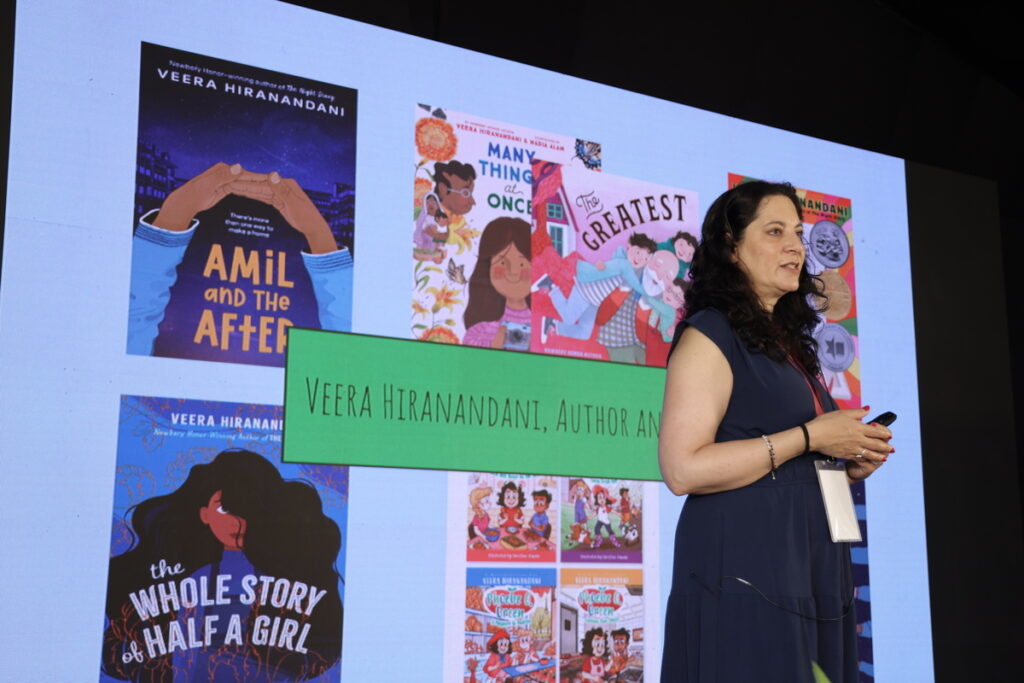
When history recalls events, it typically emphasises on the number of people who were displaced, the manner in which borders were drawn and how history shifted overnight. However, numbers alone are unable to capture the human experience of living through and after a significant moment. Narratives provide a shape to feelings that statistics can never possess. In Amil and the After, the companion book to The Night Diary, Veera Hiranandani begins to spotlight Amil, the younger brother Nisha (the protagonist of The Night Diary), who navigates life after the Partition, slowly discovering his voice through art. His sketches become more than drawings; they become a way of processing loss, grief and hardship.
The novel deeply resonates with Hiranandani’s familial history, given that her father was forced to migrate across the border to Mumbai, and hence depicts personal narratives and/or elements that were a part of her father’s life. These memories of her father and aunts planted the seeds for The Night Diary. Following the novel’s publication, Hiranandani grew nostalgic for her characters and began imagining their lives beyond the final page. What happens once one undergoes a traumatic experience? What is the impact of carrying wounds throughout an extensive period of time?
That curiosity gave birth to her new companion novel, told through Amil’s perspective. Unlike Nisha, Amil doesn’t pour his thoughts into a diary; instead, he sketches. Frustrated by questions he cannot answer with words, he turns to art. Hiranandani suggests that his sketches become more detailed, more alive as he processes pain, confusion, and resilience. In the book, Nisha and Amil even collaborate: she writes, he draws. It’s a testament to how different forms of expression can unite to narrate a story.
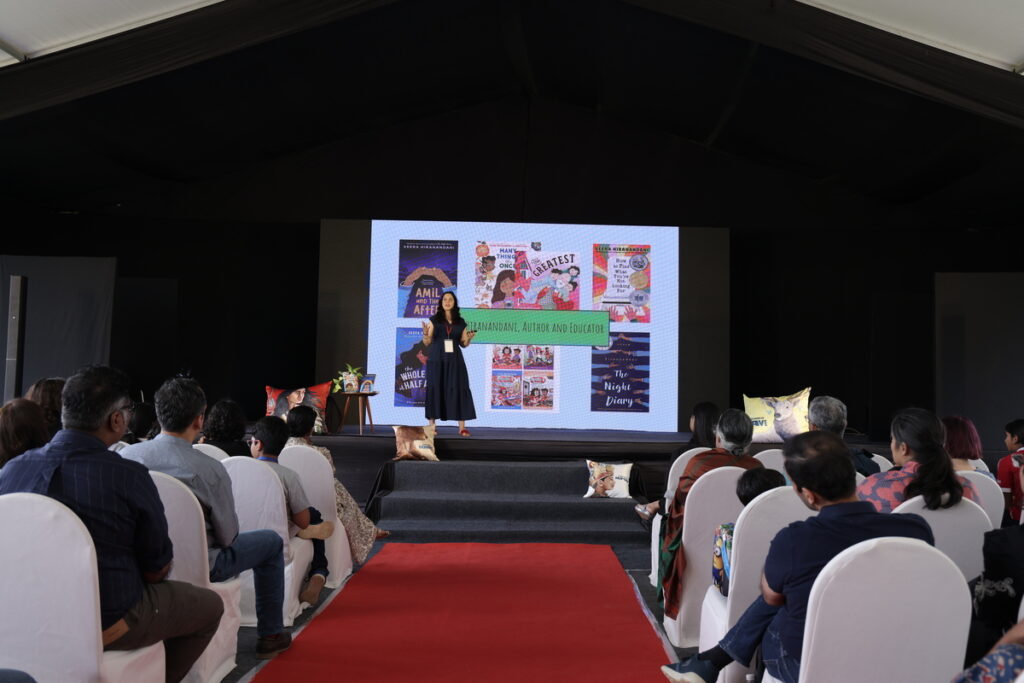
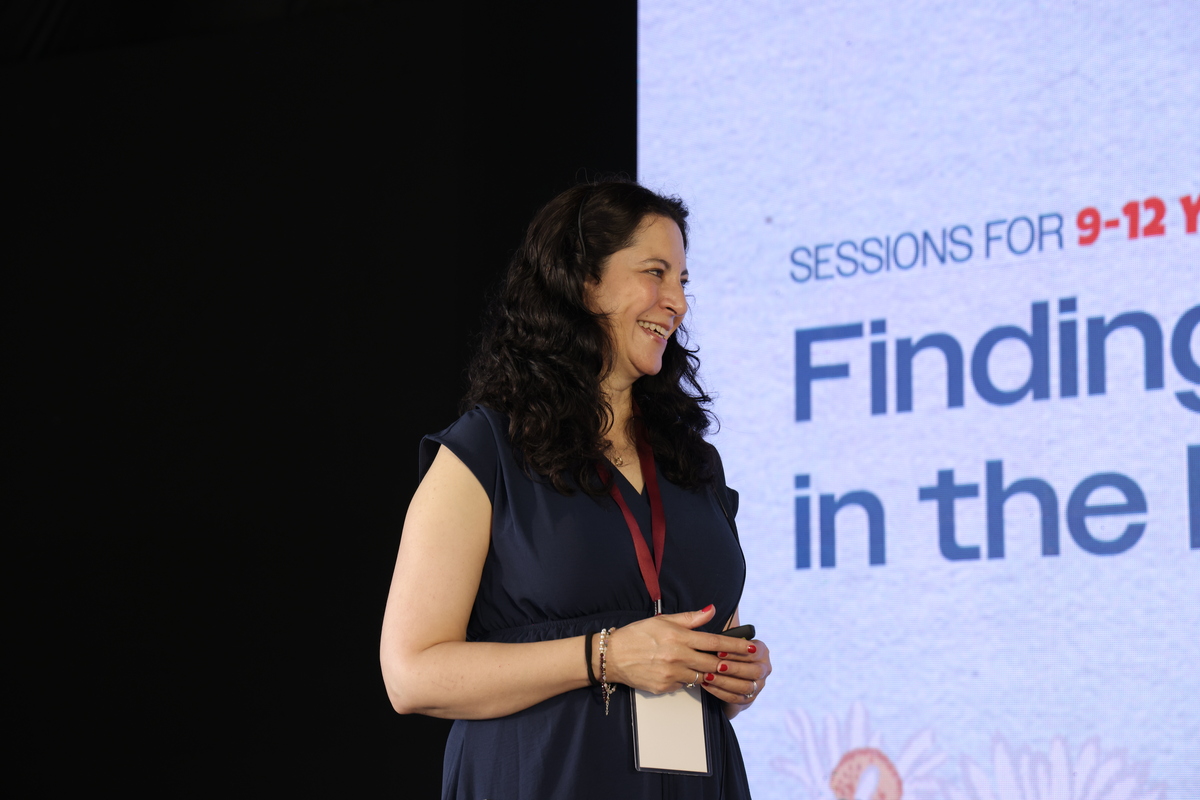
Hiranandani explained that she chose to focus on an ordinary family caught in extraordinary times, capturing how Partition felt rather than merely how it unfolded. In doing so, she draws parallels to the recent pandemic, particularly in the way events moved with disorienting speed. Real maps, photographs, and details of trains and cities anchor the novel, while imagination and inspiration of her family breathes life into its characters. Although the novel’s characters are imaginary, Hiranandani emphasises on the contrast between a narrative timeline and a historical timeline, and the significance of the context in a narrative. For instance, Gandhi’s assassination must be covered because of the story timeline as such events can’t be shifted for the sake of the plot. The story must stay true to the historical context, even as it tells a personal tale. Furthermore, she touched on themes that are urgent in a contemporary setting: the manner in which young people often ask questions adults struggle to answer, how trauma can alter family dynamics, and how creative expression—whether through words or art—can heal.
By anchoring her novel in lived experience while drawing parallels to the pandemic, Hiranandani underscores how history continues to echo in the present. In Amil’s journey, she reminds us that survival is never only about resilience, that trauma endures, shaping lives long after the event. Amil’s sketches remind us that creative expression, whether through art or words, remains one of the most powerful ways to process uncertainty and loss.