by Tysha Raheja, Grade 7
Not all ideas for novel-writing come from tedious planning, research, and brainstorming—they could just be ordinary events in our daily lives, as well as unique observations from the environment around us. Pablo Cartaya got the idea for his book The Last Beekeeper while trying to focus on ideating concepts for the environment-related book he had to write, as he kept on getting distracted by his phone and a bee flying around him, both constantly buzzing until he had enough. He killed the bee and silenced his phone, before realising that both of these “challenges” would be the main idea of his book. The difference between us humans and bees is that humans almost always take a side and try to outdo one another in contexts and situations when it is imperative that they work together to come up with a solution, and they constantly want more than the other, fighting for resources that they already have in a reasonable amount just because someone else has it too. On the other hand, bees work in unity with each other to achieve a common goal, doing the same amount of work and benefitting from it in the same way. Each bee has a role to play in their hive (community) and none of them take more than the other.
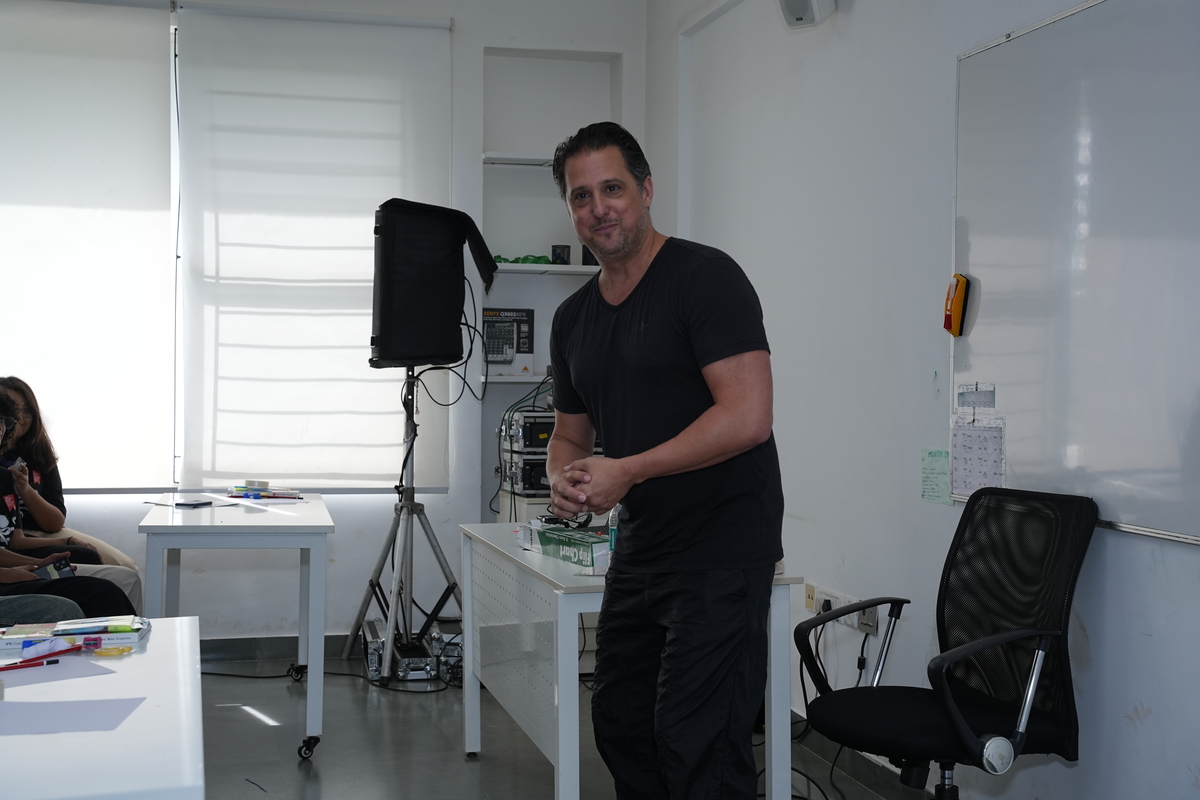
A memorable line from the Masterclass was: “I didn’t manipulate you. I’m just the storyteller.” This tied strongly to the way the speaker presented his ideas and anecdotes. The overall atmosphere of the masterclass was incredibly engaging, interactive, and humorous. The speaker shared personal anecdotes that were both relatable to the audience and relevant to the topic of discussion, and they were delivered in a way that made the audience laugh and feel as though they were listening to a friend talking about a story, instead of a famous and well-known author talk about his experience of writing an award-winning book. The audience was also actively engaged because in the session, we did an activity where we were given a scenario that helped us understand the main idea behind Pablo Cartaya’s novel and how human decisions are shaped by different situations and how quickly humans tend to turn on each other based on those decisions’ outcomes.

This event definitely surprised me because I was not expecting it to be as captivating and amusing as it turned out to be, and I expected it to be more about how bees are crucial for the environment and how to write dystopia based on common aspects of our life. It exceeded my expectations because it was much more entertaining and memorable than I thought it would be. One of the most striking takeaways for me was how inspiration for writing can come from the smallest and most mundane details of daily life. I realized that I don’t need to wait for a grand idea to hit me or spend endless hours planning before I start writing. Instead, I can pay attention to my surroundings and draw meaning from the little things that I usually overlook. Another personal insight was about human behavior—how we often divide ourselves over resources or opinions, while bees demonstrate that working collectively is far more sustainable. This gave me a fresh perspective not only on writing but also on how I see human interactions in real life.
Overall, this Masterclass left me with a deeper appreciation for both storytelling and the natural world. What stood out the most was how Pablo Cartaya took something as simple as a bee buzzing around him and turned it into the foundation of a thought-provoking dystopian story. The event was memorable not just because of the content but also because of the way it was presented—with humor, honesty, and relatability. While I wished there had been more technical insights into writing dystopia, I walked away feeling inspired to look for stories in the everyday and to think more critically about human behavior. The impact of the event was lasting, because it reminded me that creativity can be sparked by the smallest details if we just take the time to notice them.