
by Kabir Singh, Grade 9
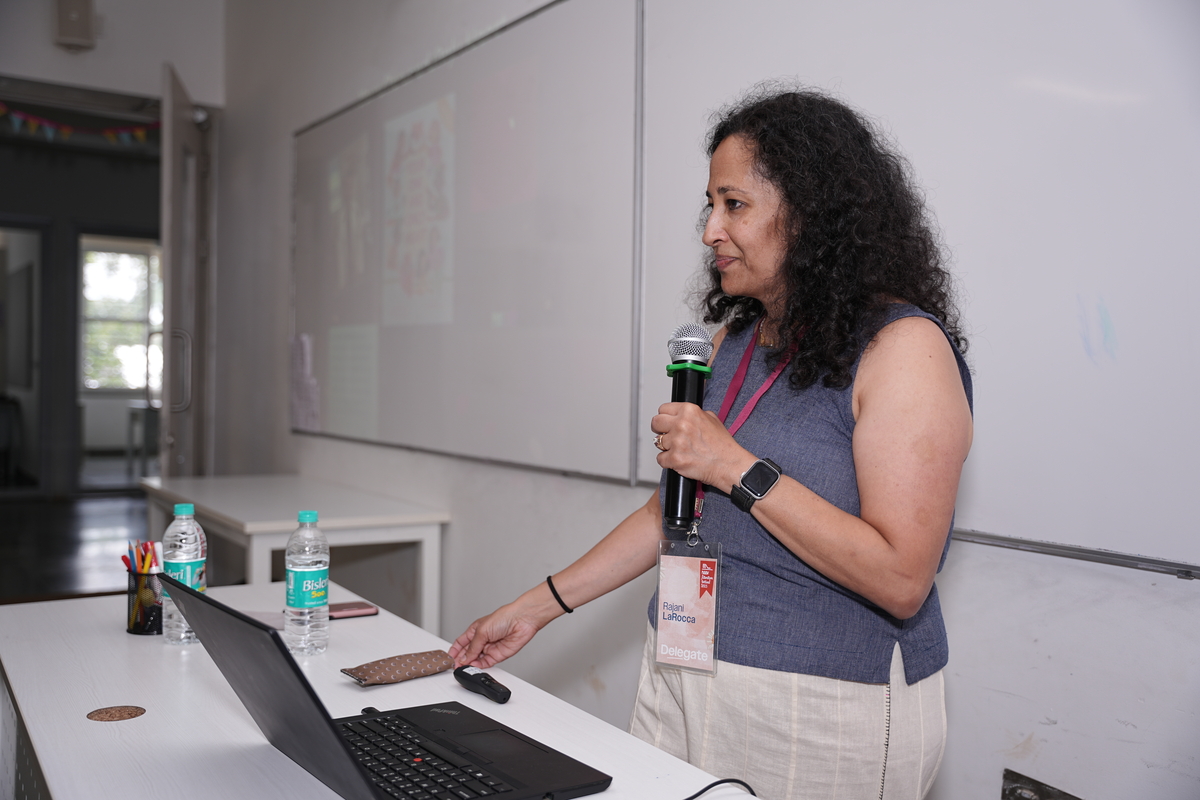
At the whimsical session ‘Make Some Noise’, author Vibha Batra helped remind us that books aren’t just about what we see, but can also portray what we hear, smell, touch, or even taste on an everyday basis. We often focus solely on visual imagery, forgetting how powerfully other senses shape stories.
Drawing from her picture book Sound Town, Ms. Batra showed how onomatopoeia (or ‘sound words’) can bring writing to life. She kept the sea of young readers on their feet by quizzing them on the sounds of everyday objects, and responses could be heard being shouted throughout the Kathashala tent.

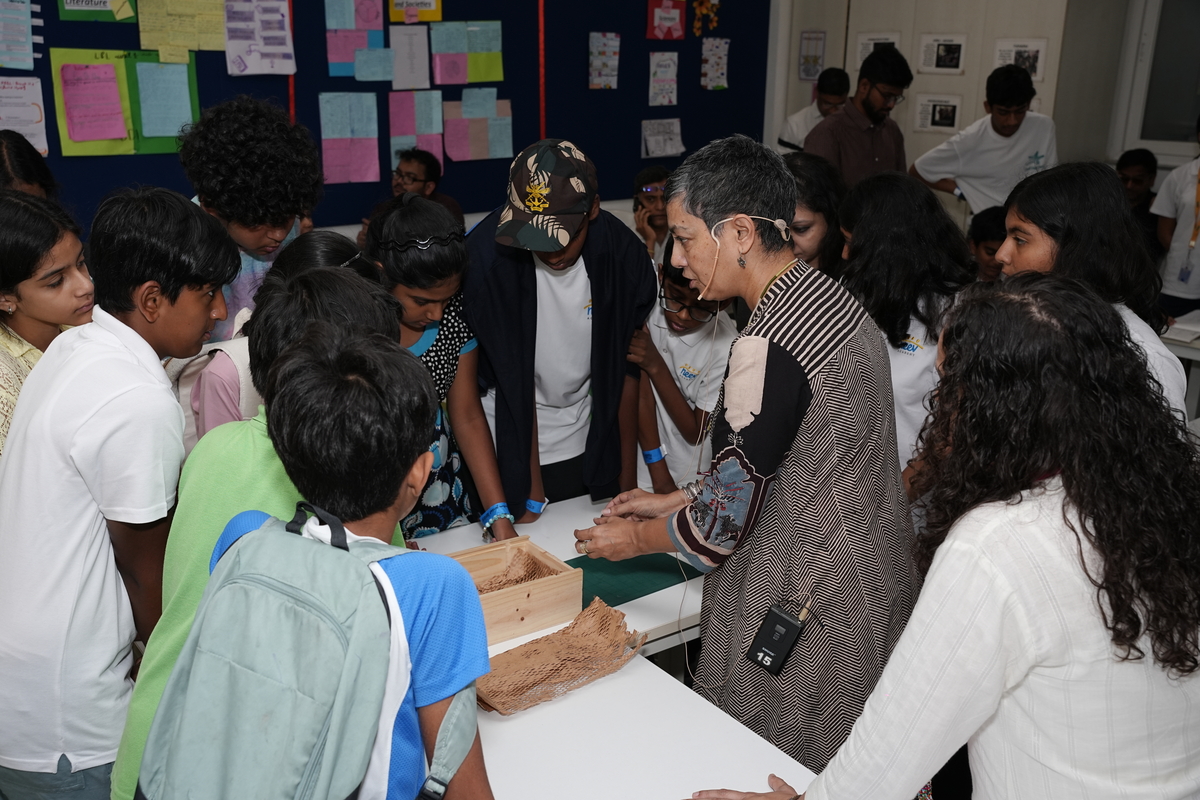
But the highlight of the session was when she invited children onstage to draw objects and act out the unique sounds they made with her. From chattering monkeys to buzzing bees, from twittering birds to sploshing puddles, the stage turned into a vibrant playground. The atmosphere was heartwarming, with younger participants radiating energy, and the adults being just as supportive.
What clearly stood out was the session’s interactivity, successfully incorporating many fun games into the discussion. The takeaway was clear: sound is a tool just as vital as other senses in writing. By embracing auditory imagery, we can make our stories more memorable and alive.